THE Name Fecken-Kirfel

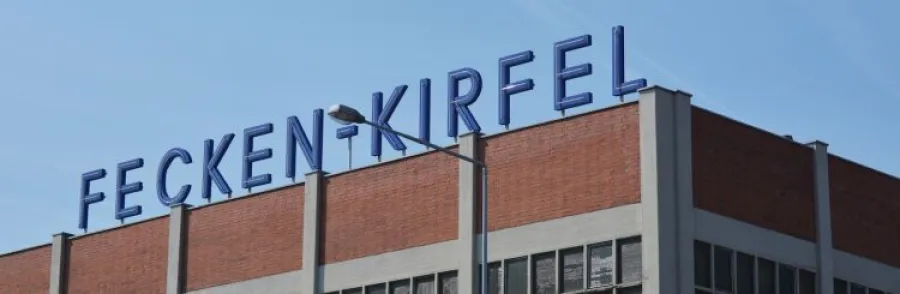
    In 1870, Johann Michel Joseph Fecken, a machine manufacturer in Aachen, founded the company Fecken-Kirfel. The young engineer received generous financial support from his father-in-law, Mr. Kirfel. This close relationship gave rise to the company’s current name, “Fecken-Kirfel.”
    FROM TEXTILE PROCESSING TO THE WORLD'S MOST ADVANCED CUTTING MACHINES

    Initially, Fecken-Kirfel produced machinery for cloth manufacturing and wool spinning, as well as “Locomobil steam engines” with an output of 2–30 horsepower. In the years that followed, machine tools were added to the product portfolio. The product range has been steadily expanded ever since, evolving from manually operated leatherworking machines to the manufacture of fully automatic slitting and cutting machines for the plastics, rubber, and cork industries—which today constitute Fecken-Kirfel’s sole business.
    From a long-established business to a family business

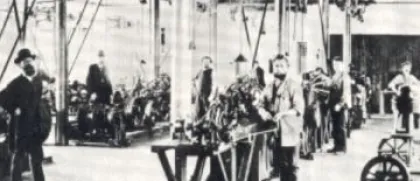
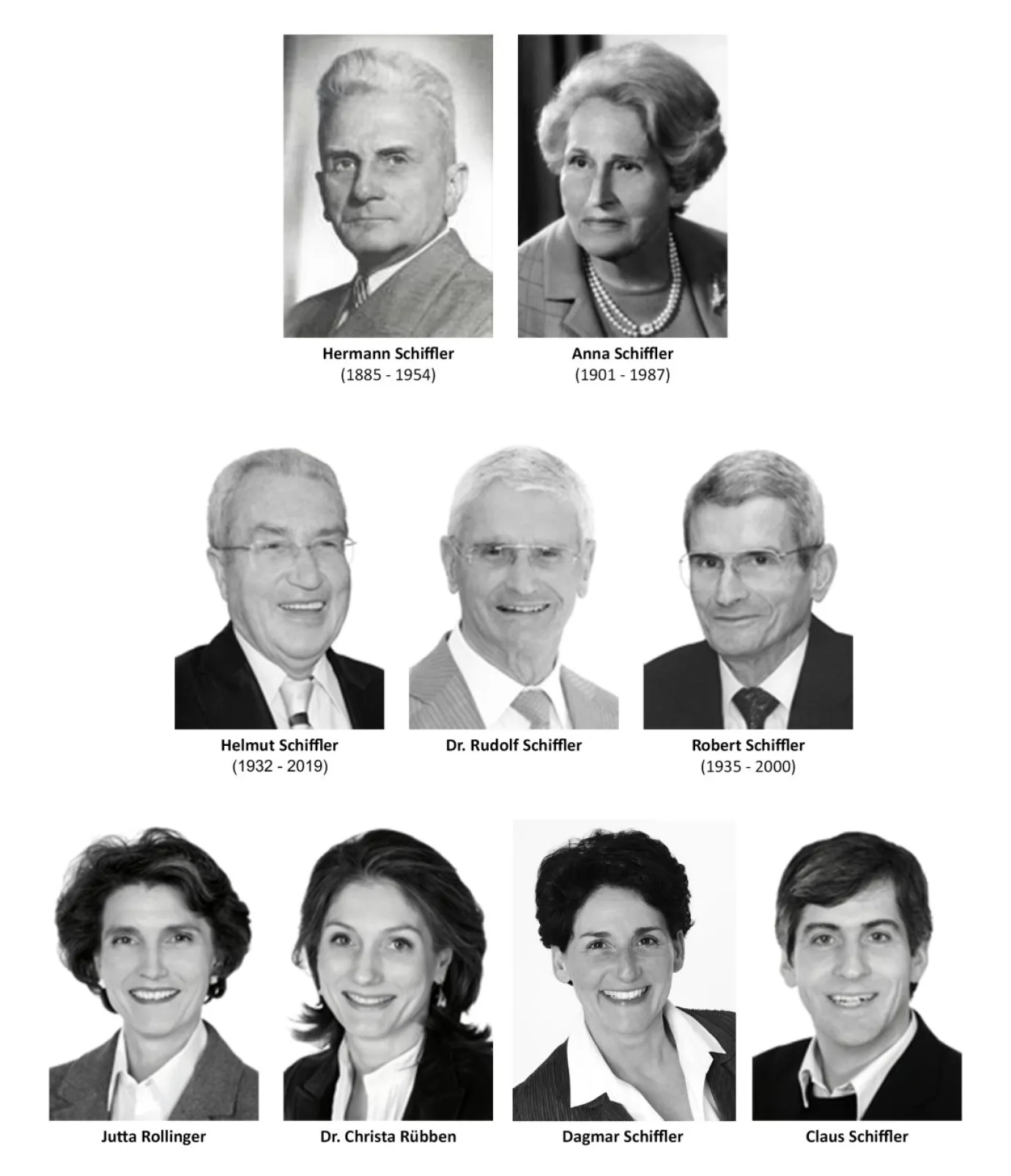
    In 1905, Karl Haschke, a merchant from Aachen, took over the company. With Karl Haschke’s death in 1918, a new era in the company’s history began. This transformed the long-established firm Fecken-Kirfel into a successful family business. In 1919, Hermann Schiffler, a graduate engineer from Aachen, became a new partner in the company. He decided to retain the company name, which was already known worldwide. By 1921, Fecken-Kirfel already had over 50 employees and an extensive machine park, including numerous lathes, drilling machines, planers, and milling machines.

    After his death in 1954, his wife Anna, who had been with the company since 1917, took over the business. In 1969, ownership and management of the company finally passed to the second generation—her three sons, Helmut, Robert, and Dr. Rudolf Schiffler. Today, the third generation—Dagmar Schiffler, Claus Schiffler, Jutta Rollinger, and Dr. Christa Rübben—as partners, provide significant impetus for the strategic direction and development of Fecken-Kirfel.

    Move to the current headquarters

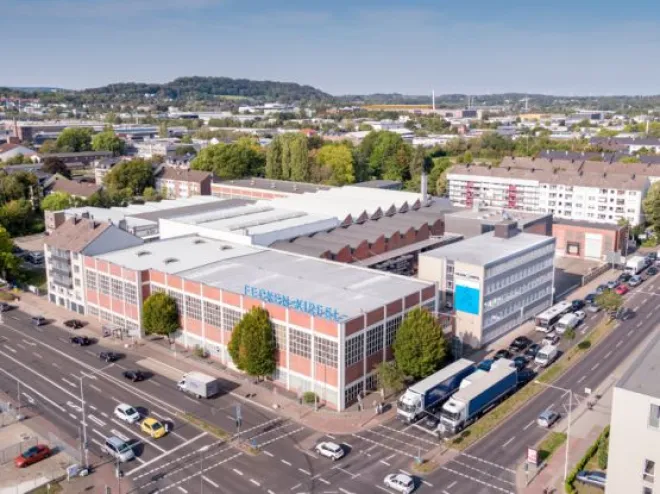
    Fecken-Kirfel was originally located in Aachen “vor Jacobsthor” and subsequently changed its address several times. In 1938, Hermann Schiffler, by then the sole owner of Fecken-Kirfel, moved the production facility to its current location, which, at Fecken-Kirfel’s initiative, was ceremoniously renamed Prager Ring in 1993—in honor of the Czech capital—in the presence of the then-Czech ambassador. This remains the company’s headquarters to this day.

    Economic Recovery in the Postwar Period

    Hermann Schiffler steered the company through the turmoil of World War II: He refused to join the Nazi Party, which resulted in the company losing its workforce. In 1944, the production building narrowly survived an incendiary bombing raid. After the war, production was able to resume with just a handful of employees.

    A period of strong growth followed through the 1970s: The number of employees rose to well over 200, and production was steadily expanded. Three new crane halls for shipping, mechanical manufacturing, and assembly alone were added to the existing building. In 1969, an administrative building was added, followed in the 1970s and 1980s by additional crane halls with a sawmill, as well as the first section of a fifth crane hall for assembly. 

    International Focus and Further Expansion

    As early as the 1950s, Fecken-Kirfel began expanding internationally. The company specialized in the production of splitting and cutting machines. Fecken-Kirfel quickly gained worldwide recognition as a trailblazer and pioneer in the development of new technologies for machinery used in the plastics, rubber, and cork industries.

    In 1974, the company founded its wholly owned subsidiary, Fecken-Kirfel America Inc., in Franklin Lakes, New Jersey, USA. Shortly thereafter, a dedicated production facility was built at the current U.S. location on Leighton Place in Mahwah, New Jersey.

    In 1986, Fecken-Kirfel acquired additional land at its headquarters in Aachen to ensure future expansion of production for Fecken-Kirfel. Consequently, in 2004 and 2007, the crane hall for the sawmill and band knife production, as well as the assembly hall, were expanded in two construction phases with additional two-story buildings.

    With the construction of another two-story building housing employee facilities and a production hall for a state-of-the-art powder coating plant, expansion at the Aachen site continued in 2016.

    Industry leader in innovation

    Since 1950, Fecken-Kirfel has filed numerous patents and utility models, establishing itself as a technology leader in the industry. Examples include the development of the carousel slitting machine and the horizontal and vertical automatic contour cutting machines.

    In 2006, our long-time managing partner, Dipl.-Ing. Robert Schiffler, was posthumously inducted into the “Flexible Polyurethane Foam Hall of Fame” of the Polyurethane Foam Association (PFA) in the U.S. for his achievements and contributions to the development of cutting machines for the foam industry.

    Social Media